
A pendant necklace can change the character of an outfit without requiring a complete change of wardrobe. A simple metal design may add a quiet finishing touch to everyday clothing, while a larger pendant can become the main accessory in a more expressive look. For men, the best choice often depends on personal taste, clothing preferences, and how frequently the necklace will be worn.
Pendant necklaces come in many forms, including crosses, medallions, geometric shapes, engraved pieces, and decorative symbols. Each design creates a different impression. Choosing the right men’s pendant necklace involves considering its shape, material, size, and chain, then finding a balance between the jewellery and the rest of the outfit.
Start With Your Everyday Clothing
Your existing wardrobe offers a useful starting point for choosing a pendant necklace. Men who regularly wear T-shirts, jeans, and trainers may prefer uncomplicated designs that feel natural with casual clothing. A small silver pendant on a fine or medium-width chain can complement this combination without appearing overly formal.
For a wardrobe built around shirts, chinos, knitwear, and structured jackets, a polished pendant with clean lines may be more suitable. A narrow box chain or a simple cable chain can create a tidy appearance that works with smart-casual outfits.
Men who favour streetwear often have more room to experiment with proportions. Oversized T-shirts, relaxed jackets, and layered clothing can support a larger pendant or a heavier chain. The jewellery should still work with the overall outfit rather than competing with graphic prints, prominent logos, or several other accessories.
Look at the clothes you reach for most often before purchasing a necklace. An accessory that works with five or six regular outfits is usually a more practical choice than one that only suits a single look.
Select a Pendant That Reflects Your Personality
The pendant’s design communicates something about the wearer, even when the meaning is subtle. Religious symbols can express faith or personal values, while engraved medallions may represent family connections, memories, or significant dates.
Geometric pendants suit men who prefer a restrained, contemporary appearance. Rectangular bars, circles, and simple abstract forms can provide visual interest without elaborate decoration. They also pair easily with different necklines and other jewellery.
Decorative pendants offer more room for individual expression. Textured surfaces, distinctive shapes, and detailed engraving can make a necklace feel less conventional. The trick is to choose a design that reflects your taste rather than selecting a piece simply because it attracts attention.
Meaningful jewellery often has a longer place in a wardrobe than accessories purchased solely for a passing trend. Consider whether you would still appreciate the design if fashion preferences changed over the next few years.
Match the Metal to Your Existing Accessories
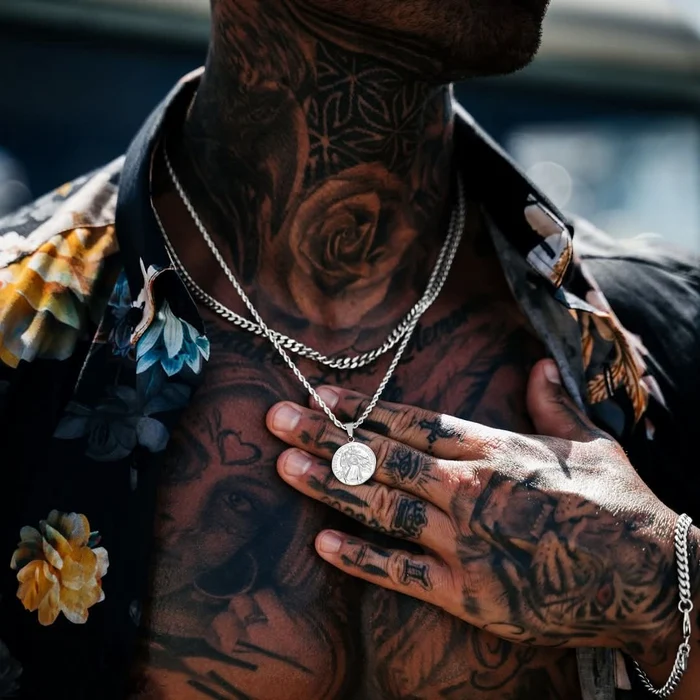
Silver, stainless steel, and gold-coloured finishes each create a different visual effect. Silver has a cool appearance that pairs naturally with monochrome clothing, denim, navy, and grey. It is a useful choice for men who prefer understated accessories.
Stainless steel can offer a similar silver-toned appearance, often with a contemporary finish. Its suitability for regular wear depends on the grade, construction, coating, and care instructions of the particular piece.
Gold-coloured pendants introduce warmth. They can complement brown, olive, beige, cream, and black clothing. A gold pendant may also stand out against a dark T-shirt, especially when the design is relatively simple.
Matching every accessory is not essential. A silver necklace can work with a watch that has a gold-coloured case, but the combination should look deliberate. Repeating one finish elsewhere in the outfit, perhaps through a ring or belt detail, can help bring the different elements together.
Choose a Chain Length That Suits the Neckline
Chain length affects both the pendant’s visibility and the proportions of an outfit. Shorter chains generally keep the pendant near the collarbone, making them suitable for simple crew-neck shirts and open collars.
Medium-length chains often provide more flexibility. The pendant can sit on the upper chest and remain visible with several types of casual clothing. Longer chains create a relaxed appearance and can work particularly well with loose-fitting tops.
The neckline should guide the final decision. A pendant on a short chain may sit awkwardly against a high crew neck, while a longer chain can fall naturally over the fabric. V-neck shirts often create a clear space for the pendant, helping it remain visible without appearing crowded.
Neck size and personal comfort also affect the ideal measurement. Check the chain length in centimetres or inches and compare it with a necklace you already own. This simple step can prevent disappointment when ordering online.
Balance Pendant Size With Chain Thickness
Proportion is one of the easiest ways to make a necklace look considered. A small pendant usually suits a fine or medium-width chain, allowing the design to remain visible without excess weight around the neck.
A larger pendant can benefit from a stronger chain, particularly if the piece has a substantial bail or a textured finish. The chain should support the pendant’s visual weight and be appropriate for its physical weight.
A heavy chain with a tiny pendant may look unbalanced, while an oversized medal on a very delicate chain can appear mismatched. Check the pendant dimensions and chain width before buying. If the jewellery will be worn daily, also consider the clasp and the strength of the links.
There is no universal measurement that works for every design. A broad, flat pendant may look larger than a deep, rounded pendant of similar height. Product photographs and measurements should be considered together.
Dress for the Occasion
A pendant necklace can work across casual, smart-casual, and some formal settings. The level of visibility should suit the occasion.
For everyday errands, a straightforward pendant with a T-shirt or sweatshirt keeps the outfit relaxed. At work, a smaller design beneath an open-collar shirt may be appropriate, depending on the workplace dress code. For dinner or an informal event, a polished pendant can complement a fitted shirt or lightweight knit.
Formal occasions usually call for restraint. A simple necklace worn beneath a shirt can remain personal without distracting from a suit or tailored jacket. Large pendants and multiple layered chains may be better suited to social settings with a relaxed dress code.
The aim is not to follow strict rules but to understand how accessories affect the overall impression. A necklace should feel appropriate to the setting and comfortable for the wearer.
Layer Pendants Without Creating Clutter
Layering allows men to combine necklaces of different lengths, textures, and designs. A plain chain paired with a single pendant can create a balanced look, while two pendants with similar sizes and shapes may compete for attention.
Begin with one necklace and add a second only if it contributes something distinct. Different chain lengths help the pieces sit separately, reducing tangling and keeping each design visible.
Varying texture can also help. A smooth box chain alongside a more textured rope chain creates contrast without relying on several decorative pendants. Keep the metal finishes reasonably coordinated if you prefer a cleaner appearance.
Comfort matters during layering. Chains can twist around one another or catch on clothing, so test the combination before wearing it for a full day.
Care for Your Necklace Properly
Regular care helps preserve the appearance of a pendant necklace. Wipe it with a soft cloth after wearing to remove everyday residue. Follow the manufacturer’s cleaning instructions, particularly for plated jewellery, engraved pieces, and sterling silver.
Store necklaces separately to reduce scratching and tangling. Keep clasps closed when possible, and avoid pulling a chain apart when removing knots. Take off jewellery before activities that may expose it to harsh chemicals or excessive force.
Check the clasp, connecting rings, and pendant bail periodically. Small signs of wear can be easier to address before a chain breaks or the pendant becomes detached.
Build a Style Around What Feels Natural
A pendant necklace should complement the person wearing it rather than dictate an entire wardrobe. Start with a design that suits your regular clothing, select a comfortable chain length, and pay attention to the relationship between the pendant and other accessories.
A simple silver medallion may be ideal for one man, while another may prefer a larger geometric pendant or a gold-coloured design. Personal style develops through choices that feel authentic and practical. The best necklace is one you can wear confidently, care for easily, and enjoy across different stages of your life.