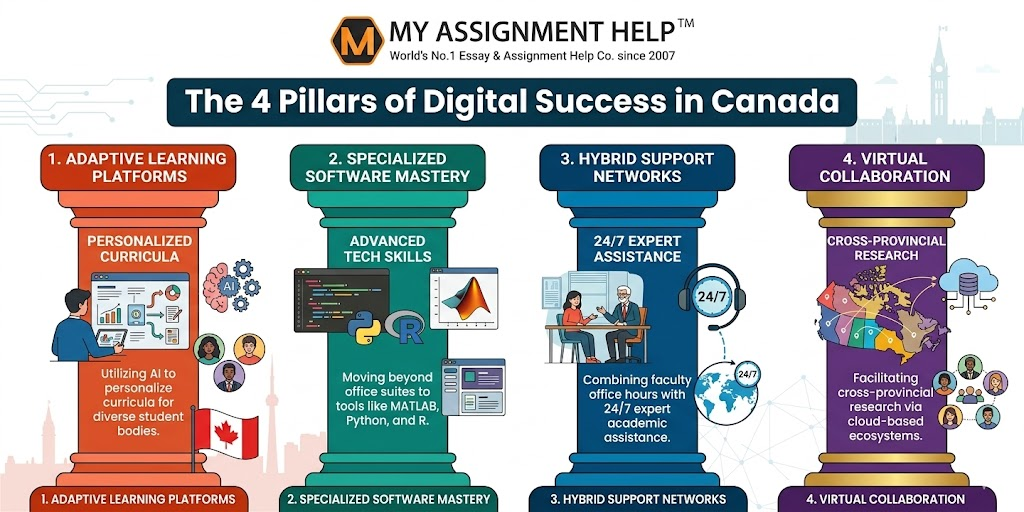

The landscape of Canadian higher education is currently navigating a period of unprecedented transformation. From the historic lecture halls of McGill to the tech-driven labs at the University of Waterloo, the traditional “chalk and talk” era has effectively yielded to a multifaceted digital ecosystem. This transition is a calculated evolution designed to meet the demands of a high-tech, globalized economy. As Canadian institutions strive to maintain their standing as world leaders in innovation, the integration of specialized digital tools—and the necessary matlab homework help required to master them—has become the cornerstone of academic excellence.
However, this rapid digitization brings its own set of challenges for the modern learner. Students across the provinces are increasingly expected to master complex software and navigate sophisticated research methodologies that go far beyond standard classroom instruction. In response to these heightened academic pressures, finding a reliable assignment helper Canada students can depend on provides the necessary scaffolding to bridge the gap between theoretical lectures and practical application. By leveraging localized expertise that understands the unique grading rubrics of Canadian post-secondary education, students can ensure their submissions remain competitive while maintaining rigorous academic integrity.
The Evolution of the “Virtual Campus”
Canadian universities have historically been early adopters of technology, but the current shift is deeper than simple hardware upgrades. We are witnessing the rise of the “Virtual Campus”—a decentralized model where learning happens asynchronously across time zones. For a student in rural Newfoundland or an international student in downtown Toronto, digital tools are the great equalizer. These platforms offer access to world-class libraries and simulation software that were once confined to physical campus labs.
Data from the Canadian Digital Learning Research Association (CDLRA) suggests that over 70% of Canadian faculty members now integrate at least one form of specialized digital tool into their core assessment strategies. This shift ensures that graduates are not just “degree-holders” but “tool-proficient professionals” ready for the Canadian workforce.
The Role of Computational Intelligence
As we delve deeper into specialized fields, the tools become more niche. In the realm of engineering and mathematics, MATLAB remains the gold standard for numerical computation. The digital shift has moved this tool from the peripheral lab into the heart of the curriculum. The ability to model fluid dynamics or financial risk through code is now a baseline expectation. When students struggle with these steep learning curves, the availability of specialized support ensures that the “digital divide” does not hinder a student’s potential to innovate.
Key Takeaways for Canadian Students
- Digital Fluency: Success is now defined by how well you can navigate industry-specific software.
- Localized Support: Using services tailored to Canada ensures compliance with domestic academic standards.
- Strategic Resource Allocation: Balancing time between complex coding tasks and core research is vital.
- Ethical Innovation: Using digital aids as learning scaffolds to deepen conceptual understanding.
Conclusion: The Future is Hybrid
The digital shift in Canadian higher education is permanent. By embracing specialized tools and professional support networks, students are better equipped to enter a workforce that values agility and technical prowess. The success of the next generation of Canadian engineers, data scientists, and educators depends on their ability to master these digital environments today.
See also: Fashion Choices That Boost Self-Esteem
Frequently Asked Questions
Q: Does using an assignment helper in Canada adhere to academic integrity guidelines?
When used as a study aid and a reference for understanding complex rubrics, professional assistance supports the learning process and helps students improve their own original research.
Q: Why is MATLAB homework help so in-demand currently?
As Canadian STEM programs become more data-intensive, MATLAB has become central to assessments. Experts help students bridge the gap between classroom theory and practical software application.
Q: How do digital tools affect the cost of education in Canada?
While there are initial software costs, digital tools often reduce the need for physical textbooks and allow for more flexible work-study schedules.
Author Bio
This article was contributed by a Senior Content Strategist at MyAssignmentHelp. With extensive experience in the Canadian ed-tech sector, they focus on helping students navigate the intersection of technical curriculum and digital academic success through high-level strategic support.
References
- Statistics Canada (2024). “Digital Literacy and the Canadian Labour Market.”
- Canadian Digital Learning Research Association (2023). “Trends in Online and Digital Learning.”
- University of Toronto Press. “Innovation in Canadian Higher Education: A Post-Pandemic Analysis.”