
Water damage can affect a property within minutes, leaving soaked flooring, damaged walls, ruined belongings, and hidden moisture behind. A burst pipe, overflowing appliance, roof leak, or sudden flood can all require immediate attention. Understanding how emergency water damage restoration services work helps property owners respond quickly, limit further damage, and make informed decisions about repairs. The right response depends on the source of the water, how far it has spread, and how long building materials have remained wet.
The First Steps to Take After Water Damage
The first priority is to protect people and prevent the situation from getting worse. If water is entering the property from a burst pipe, shut off the main water supply if it is safe to do so. Avoid entering flooded rooms where electrical outlets, appliances, or wiring may be submerged. Contact the appropriate emergency service if there is an immediate safety risk.
Once the area is safe, move important documents, electronics, and small valuables away from wet areas. Take photographs and videos of damaged rooms, furniture, flooring, and personal belongings before removing anything, provided doing so does not put anyone at risk. These records may help with an insurance claim.
Do not assume that a small puddle means the damage is minor. Water can travel beneath laminate flooring, behind skirting boards, through wall cavities, and into insulation. A prompt professional inspection can identify moisture that is not visible from the surface.
How Restoration Professionals Assess the Damage
A restoration team usually begins by identifying the source of the water and determining which parts of the property have been affected. This assessment helps establish the work required and whether specialist precautions are necessary.
Technicians may use moisture meters, thermal imaging cameras, and other inspection equipment to locate damp materials. They also consider the type of water involved. Clean water from a supply pipe presents different risks from water containing sewage, chemicals, or flood contaminants.
The affected materials matter too. Solid timber may respond differently to moisture than engineered wood, plasterboard, carpet, or insulation. Some materials can be dried and restored, while others may need removal and replacement.
A written assessment should explain the immediate priorities, the proposed drying process, and any materials that may need to be discarded. Property owners should ask for clarification if the scope of work or expected costs are unclear.
Water Extraction Comes Before Structural Drying
Standing water needs to be removed before effective drying can begin. Restoration technicians may use submersible pumps for deeper water and specialist wet vacuums for shallower areas. Removing water quickly reduces the time that floors, walls, and furnishings remain exposed to moisture.
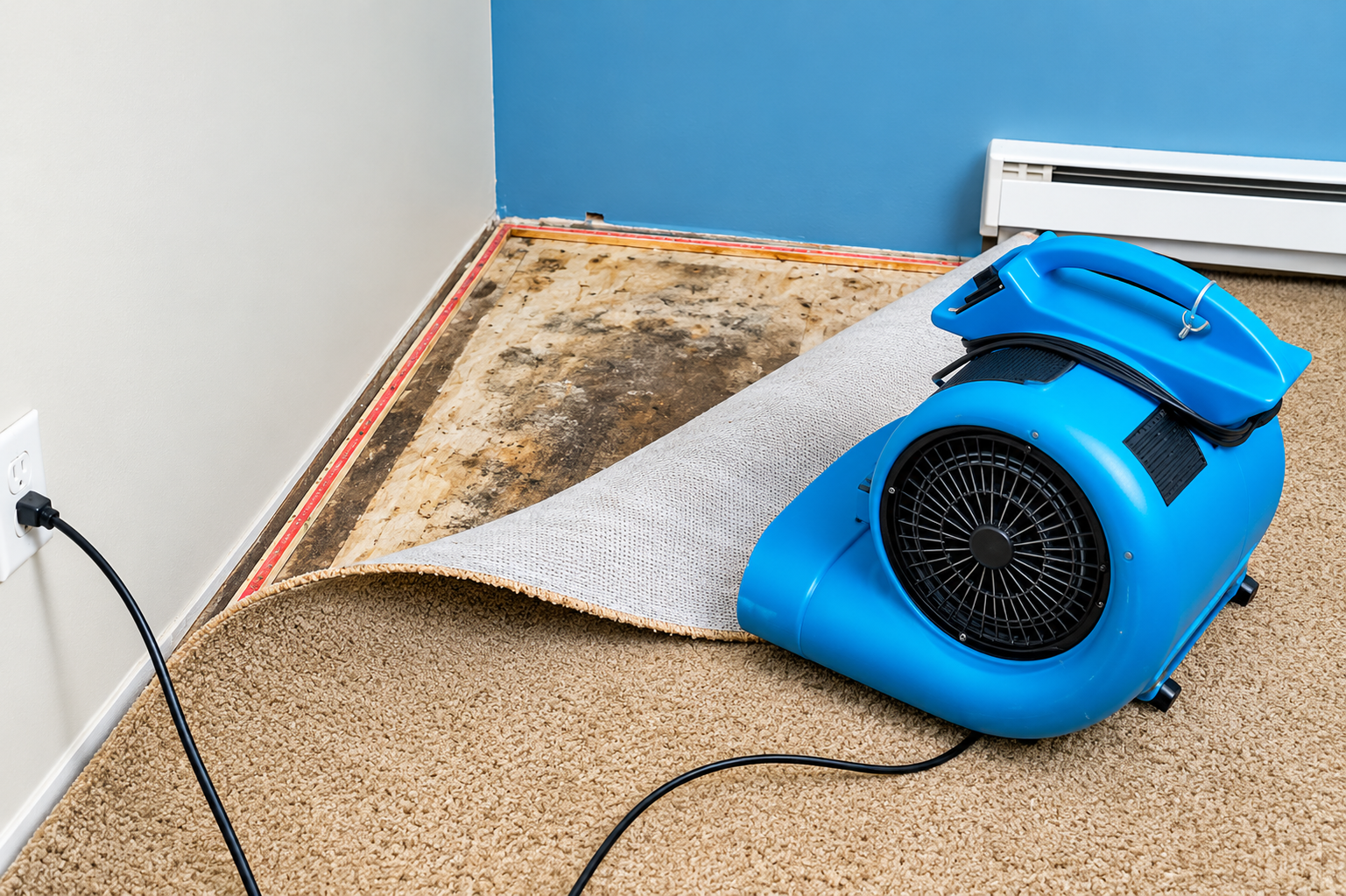
After extraction, technicians address the water trapped in building materials. Commercial dehumidifiers draw moisture from the air, while air movers encourage evaporation from suitable surfaces. Equipment placement depends on the room layout, the materials involved, and the results of moisture readings.
Opening windows is not always the best drying method. In humid weather, outdoor air may introduce additional moisture, making indoor drying less effective. Professional teams assess environmental conditions before deciding how to ventilate a property.
Drying also requires monitoring. Equipment may need to run for several days, depending on the extent of the damage and the materials affected. Technicians should check moisture levels regularly rather than relying solely on the passage of time.
Why a Fast Response Matters
Delays can allow water to spread into adjoining rooms and lower levels of a building. Wet timber flooring may swell or warp, paint can blister, and plasterboard may soften or lose strength. Electrical systems and household appliances can also require inspection before they are safe to use again.
Mold presents another concern. Under favourable conditions, mould can begin growing within roughly 24 to 48 hours after materials become wet. The exact timing depends on temperature, humidity, material type, and other environmental factors.
Arranging 24 7 water damage restoration services can be particularly useful when a pipe bursts overnight, a commercial premises floods outside normal working hours, or water continues entering the property during a storm. Around-the-clock availability allows an initial response to begin without waiting for the next business day.
However, a rapid arrival does not guarantee a successful restoration. The team must also use appropriate equipment, follow safe working practices, identify concealed moisture, and verify that affected materials have dried adequately.
Cleaning, Sanitisation, and Mould Prevention
Water removal and structural drying do not always complete the restoration process. Surfaces, furnishings, and personal belongings may need cleaning, and some areas may require sanitisation.
The appropriate treatment depends on the source of the water. Items exposed to contaminated floodwater or sewage may pose health risks and require specialist handling. Porous materials that have absorbed contaminated water may be unsuitable for recovery.
For clean-water incidents, technicians assess which belongings can be cleaned and dried safely. Carpets, upholstery, mattresses, and other absorbent items should not automatically be considered salvageable simply because their surfaces appear dry.
If mould is already present, the affected area may need a separate remediation process. This can involve containing the work area, removing contaminated materials, cleaning suitable surfaces, and correcting the moisture problem. Painting over mould or applying a surface treatment without addressing the underlying dampness will not resolve the cause.
Good restoration practice focuses on eliminating excess moisture and confirming that the original source of water has been controlled.
Choosing a Suitable Restoration Company
Selecting a restoration provider requires more than comparing advertised prices. Look for a company that can explain its assessment process, equipment, drying methods, and approach to documenting the work.
Ask whether the team has experience with the specific problem, such as sewage backups, flooded basements, burst pipes, or storm-related damage. Check relevant licences, insurance, training, and local requirements where applicable. Independent reviews and references can also help establish whether the company communicates clearly and completes work as agreed.
Reliable water damage restoration services should provide a clear scope of work and explain which tasks are urgent, which repairs can wait, and which materials may require replacement. Ask how progress will be monitored and what evidence will be used to confirm that drying is complete.
It is also sensible to contact your insurer promptly. Policies vary in their treatment of sudden plumbing failures, gradual leaks, flooding, and maintenance-related damage. Keep receipts for emergency expenses and retain photographs, inspection reports, and restoration records. Do not assume that every restoration cost will automatically be covered.
What Property Owners Should Avoid
Several common reactions can make water damage harder to manage.
- Using electrical equipment in wet areas: Never operate ordinary household appliances or extension leads in flooded rooms.
- Waiting for visible mould: Moisture can remain trapped behind walls and beneath flooring long before mould becomes obvious.
- Removing materials without assessment: Unnecessary demolition can increase costs, while leaving severely damaged materials in place may delay recovery.
- Using household fans on contaminated water: Moving air around a contaminated area can spread harmful particles.
- Accepting an unverified drying result: Surfaces can feel dry while moisture remains inside the structure.
Avoiding these mistakes can help protect both occupants and the building during the restoration process.
Planning for a Safer Recovery
A successful recovery addresses the immediate water problem and the conditions that allowed it to occur. After the affected areas are dry and safe, arrange repairs to damaged plumbing, roof coverings, seals, appliances, or drainage systems. Properties with a history of leaks may benefit from routine plumbing inspections, leak detectors, and clearly accessible shut-off valves.
For serious incidents, restoration water damage services may include water extraction, structural drying, cleaning, removal of unsalvageable materials, and coordination of repairs. The exact scope depends on the property and the extent of the damage.
Property owners should keep the final inspection report, moisture readings, photographs, invoices, and details of completed repairs. These records provide a useful reference if problems recur or questions arise during an insurance review.
Taking prompt, informed action can reduce avoidable damage and make the restoration process easier to manage. The priority is to secure the property, stop the source of water, arrange a proper assessment, and confirm that affected areas are dry before rebuilding begins.